

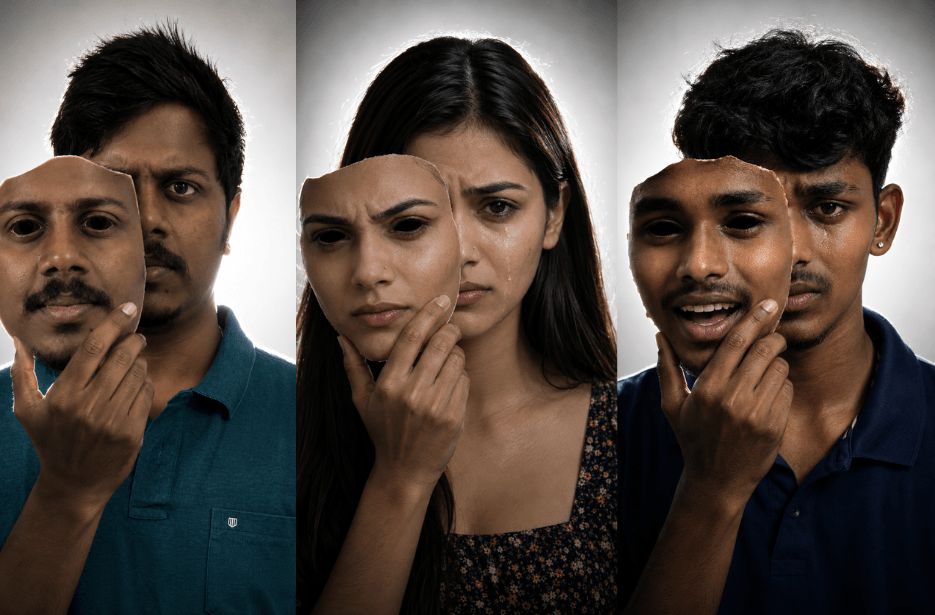
Explore a disturbing collection of ultra-realistic psychological horror portrait prompts inspired by themes of hidden identity, emotional duality, and cinematic tension. Each version presents a different emotional contrast between the detached face mask and the real face beneath it, ranging from fake calmness to concealed pain and suppressed rage. Designed for premium AI image generation, these prompts combine editorial studio photography, unsettling horror aesthetics, hyper-detailed realism, and emotionally layered storytelling for a striking psychological thriller atmosphere.
Version 1: Behind the Calm
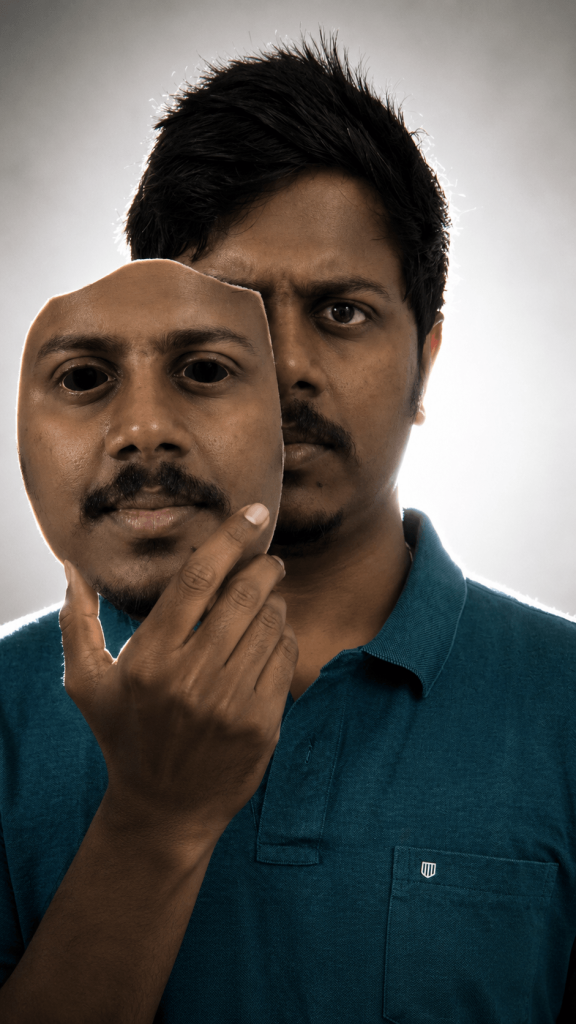
The composition is a perfectly centered, front-facing close-up bust portrait. The shoulders are squared directly toward the camera, creating a rigid symmetrical posture. The head is upright and aligned perfectly with the frame while maintaining direct eye contact. The face occupies most of the vertical frame, cropped slightly below the chest for a tight cinematic composition.
The subject is holding a disturbingly realistic detached human face mask of their own face, inspired by the unsettling dual-identity aesthetic from Us. The mask is positioned extremely close in front of the real face and shifted slightly to one side, partially revealing the real face hidden behind it, creating a layered identity illusion.
The detached mask must appear anatomically realistic and physically separate from the head. Only the facial surface exists — no skull shape, no back of the head, no hair, and no visible eyeballs. The mask should feature clearly visible cut edges around the forehead, cheeks, jawline, and chin. The edges must look thin, flexible, and believable like molded silicone or latex skin, with subtle curvature and dimensional depth. The empty hollow eye holes should create an eerie and deeply unsettling appearance.
The expression on the mask is a calm subtle smile with uncanny fake warmth — emotionally empty, artificial, and unsettling.
Behind the mask, the real face has a dark threatening expression with sharp intense eyes, lowered brows, and a sinister psychological presence that contrasts against the mask’s false calmness.
Pose details:
One hand is raised near the center of the face, delicately gripping the lower cheek or jaw edge of the detached mask with partially visible fingers. The mask is held extremely close to the real face so both layers visually blend together. The shoulders remain squared toward the camera, chin level, posture rigid, symmetrical, and confrontational.
Lighting and atmosphere:
Use a bright white studio background with a soft gradient falloff. Apply dramatic cinematic portrait lighting with soft frontal illumination combined with strong rim lighting around the hairline, jawline, shoulders, and especially the cut edges of the mask. Add glowing highlights across the skin contours and mask edges. Avoid harsh shadows while maintaining deep cinematic contrast and intense psychological tension. Both the real face and the mask should remain clearly visible.
Visual quality and style:
Ultra-realistic, hyper-detailed skin texture, realistic silicone/latex mask material, visible cut edges, realistic pores, sharp facial focus, shallow depth of field, volumetric lighting, glowing edge highlights, premium editorial studio photography aesthetic, psychological thriller mood, cinematic horror atmosphere, 85mm lens look, highly detailed and photorealistic finish.
Aspect ratio: 9:16
Version 2: Laughter Hides the Pain
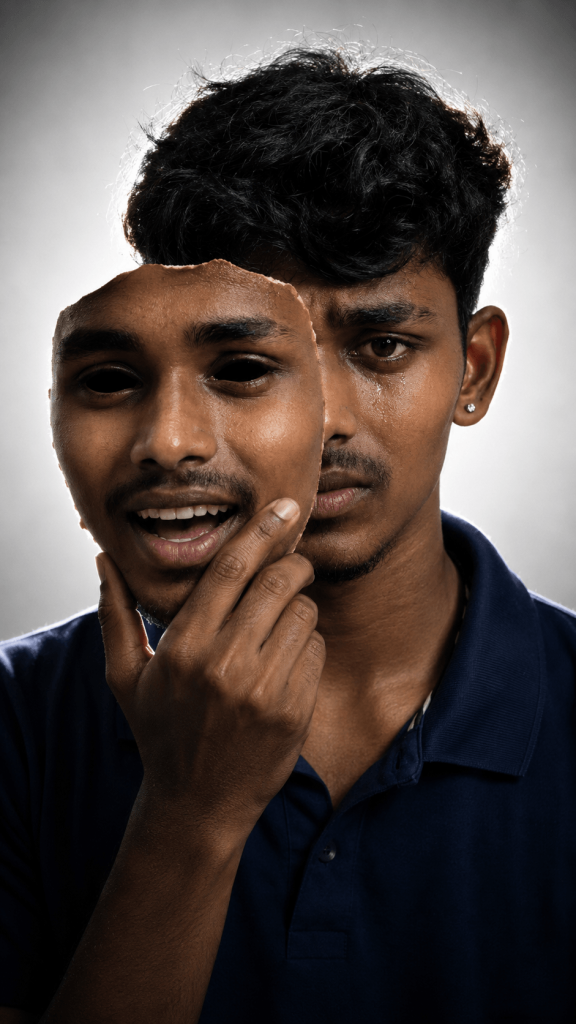
The composition is a perfectly centered, front-facing close-up bust portrait. The shoulders are squared directly toward the camera, creating a rigid symmetrical posture. The head is upright and aligned perfectly with the frame while maintaining direct eye contact. The face occupies most of the vertical frame, cropped slightly below the chest for a tight cinematic composition.
The subject is holding a disturbingly realistic detached human face mask of their own face, inspired by the unsettling dual-identity aesthetic from Us. The mask is positioned extremely close in front of the real face and shifted slightly to one side, partially revealing the real face hidden behind it, creating a layered identity illusion.
The detached mask must appear anatomically realistic and physically separate from the head. Only the facial surface exists — no skull shape, no back of the head, no hair, and no visible eyeballs. The mask should feature clearly visible cut edges around the forehead, cheeks, jawline, and chin. The edges must look thin, flexible, and believable like molded silicone or latex skin, with subtle curvature and dimensional depth. The empty hollow eye holes should create an eerie and deeply unsettling appearance.
The expression on the mask is laughing — emotionally empty, artificial, and unsettling.
Behind the mask, the real face has a sad expression, lowered brows, and a sinister psychological presence that contrasts against the mask’s false calmness.
Pose details:
One hand is raised near the center of the face, delicately gripping the lower cheek or jaw edge of the detached mask with partially visible fingers. The mask is held extremely close to the real face so both layers visually blend together. The shoulders remain squared toward the camera, chin level, posture rigid, symmetrical, and confrontational.
Lighting and atmosphere:
Use a bright white studio background with a soft gradient falloff. Apply dramatic cinematic portrait lighting with soft frontal illumination combined with strong rim lighting around the hairline, jawline, shoulders, and especially the cut edges of the mask. Add glowing highlights across the skin contours and mask edges. Avoid harsh shadows while maintaining deep cinematic contrast and intense psychological tension. Both the real face and the mask should remain clearly visible.
Visual quality and style:
Ultra-realistic, hyper-detailed skin texture, realistic silicone/latex mask material, visible cut edges, realistic pores, sharp facial focus, shallow depth of field, volumetric lighting, glowing edge highlights, premium editorial studio photography aesthetic, psychological thriller mood, cinematic horror atmosphere, 85mm lens look, highly detailed and photorealistic finish.
Aspect ratio: 9:16
Version 3: Tears Beneath the Rage
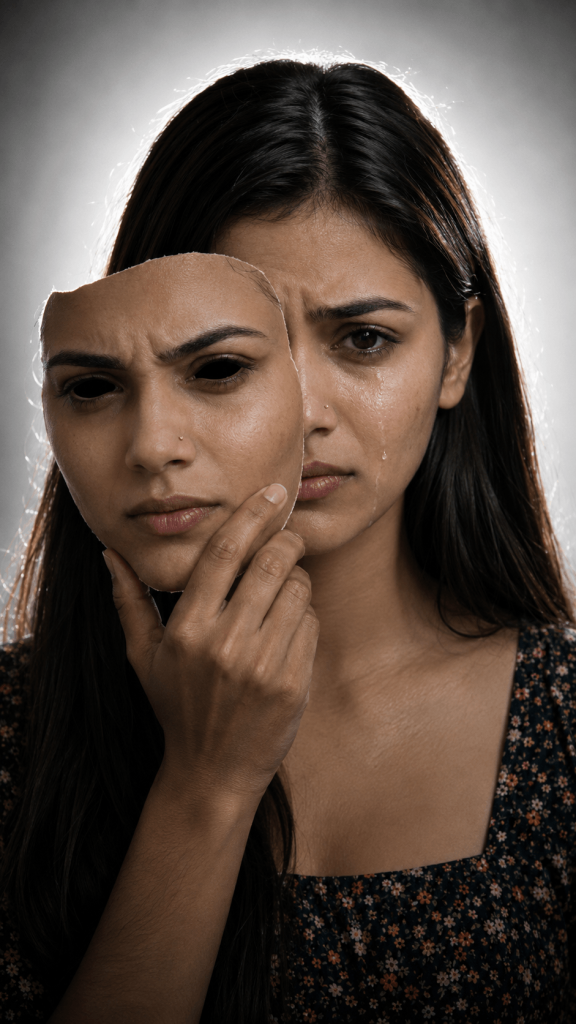
The composition is a perfectly centered, front-facing close-up bust portrait. The shoulders are squared directly toward the camera, creating a rigid symmetrical posture. The head is upright and aligned perfectly with the frame while maintaining direct eye contact. The face occupies most of the vertical frame, cropped slightly below the chest for a tight cinematic composition.
The subject is holding a disturbingly realistic detached human face mask of their own face, inspired by the unsettling dual-identity aesthetic from Us. The mask is positioned extremely close in front of the real face and shifted slightly to one side, partially revealing the real face hidden behind it, creating a layered identity illusion.
The detached mask must appear anatomically realistic and physically separate from the head. Only the facial surface exists — no skull shape, no back of the head, no hair, and no visible eyeballs. The mask should feature clearly visible cut edges around the forehead, cheeks, jawline, and chin. The edges must look thin, flexible, and believable like molded silicone or latex skin, with subtle curvature and dimensional depth. The empty hollow eye holes should create an eerie and deeply unsettling appearance.
The expression on the mask is angry — emotionally empty, artificial, and unsettling.
Behind the mask, the real face has a sad expression with teary eyes, lowered brows, and a sinister psychological presence that contrasts against the mask’s false calmness.
Pose details:
One hand is raised near the center of the face, delicately gripping the lower cheek or jaw edge of the detached mask with partially visible fingers. The mask is held extremely close to the real face so both layers visually blend together. The shoulders remain squared toward the camera, chin level, posture rigid, symmetrical, and confrontational.
Lighting and atmosphere:
Use a bright white studio background with a soft gradient falloff. Apply dramatic cinematic portrait lighting with soft frontal illumination combined with strong rim lighting around the hairline, jawline, shoulders, and especially the cut edges of the mask. Add glowing highlights across the skin contours and mask edges. Avoid harsh shadows while maintaining deep cinematic contrast and intense psychological tension. Both the real face and the mask should remain clearly visible.
Visual quality and style:
Ultra-realistic, hyper-detailed skin texture, realistic silicone/latex mask material, visible cut edges, realistic pores, sharp facial focus, shallow depth of field, volumetric lighting, glowing edge highlights, premium editorial studio photography aesthetic, psychological thriller mood, cinematic horror atmosphere, 85mm lens look, highly detailed and photorealistic finish.
Aspect ratio: 9:16
How to Use These Prompts
1. Below each image, you will see a prompt box with two buttons: Copy and Share to AI.
2. You can tap Copy to copy the full prompt manually. Or simply tap Share to AI; this will automatically copy the prompt for you.
3. After tapping Share to AI, a list of popular AI tools like ChatGPT, Gemini, Copilot, and others will appear on your screen.
4. Click on any AI tool you prefer. It will directly open the selected AI platform.
5. Once the AI page opens, paste the prompt into the prompt box (it is already copied if you used Share to AI).
6. Upload your reference image if required.
7. Click generate, and your image will be created.
8. If needed, you can slightly adjust the prompt for lighting, angle, or mood and generate again.
9. Once you are satisfied with the result, download the image and save it for your use.
Customization Options
Mask Expression Variations
Change the emotion of the detached mask to create different psychological contrasts and horror moods.
- Calm subtle smile
- Unnatural grin
- Wide disturbing laughter
- Angry glare
- Emotionless blank face
- Fake comforting smile
- Sad expression
- Terrified expression
- Sinister smirk
- Hollow lifeless expression
Real Face Expression Variations
Customise the hidden real face beneath the mask for stronger emotional storytelling.
- Intense threatening stare
- Silent rage
- Deep sadness
- Emotional breakdown
- Teary eyes
- Fear mixed with anger
- Psychotic grin
- Cold emotionless stare
- Exhausted expression
- Manipulative smirk
- Grief and pain
- Dark predatory expression
Lighting Customization
Experiment with cinematic lighting styles to alter the atmosphere and psychological tension.
- Bright white studio lighting
- Dark gray gradient background
- Red horror lighting
- Cold blue cinematic tones
- High-contrast noir lighting
- Soft diffused editorial lighting
- Harsh overhead interrogation lighting
- Neon psychological thriller glow
- Low-key dramatic shadows
- Rim-light-focused cinematic setup
Mask Material Variations
Adjust the appearance and realism of the detached face mask.
- Realistic silicone skin
- Latex texture
- Cracked porcelain mask
- Wet organic skin surface
- Burned damaged mask edges
- Glossy synthetic material
- Matte pale skin texture
- Aged worn-out mask
- Blood-stained mask edges
- Transparent translucent silicone
Horror Atmosphere Variations
Shift the overall cinematic mood and emotional tone.
- Psychological thriller aesthetic
- Analog horror atmosphere
- Experimental arthouse horror
- A24-inspired cinematic mood
- Surreal nightmare aesthetic
- Clinical horror environment
- Dark fantasy horror
- Disturbing editorial fashion horror
- Minimalist psychological tension
- Dreamlike uncanny realism
Camera & Composition Variations
Modify framing and cinematic perspective for different visual impact.
- Extreme close-up portrait
- Tight symmetrical framing
- 85mm cinematic lens look
- Ultra shallow depth of field
- Slight low-angle perspective
- Direct eye-level composition
- Wide negative space framing
- Ultra-sharp facial detail focus
- Soft background blur
- Centered confrontational composition
Additional Detail Enhancements
Add extra realism and tension to the portrait.
- Visible skin pores and texture
- Sweat reflections on skin
- Glowing mask edge highlights
- Volumetric cinematic fog
- Realistic tear reflections
- Fine facial scars
- Smudged makeup details
- Wet eyes with catchlight reflections
- Subtle skin imperfections
- Cinematic film grain texture