
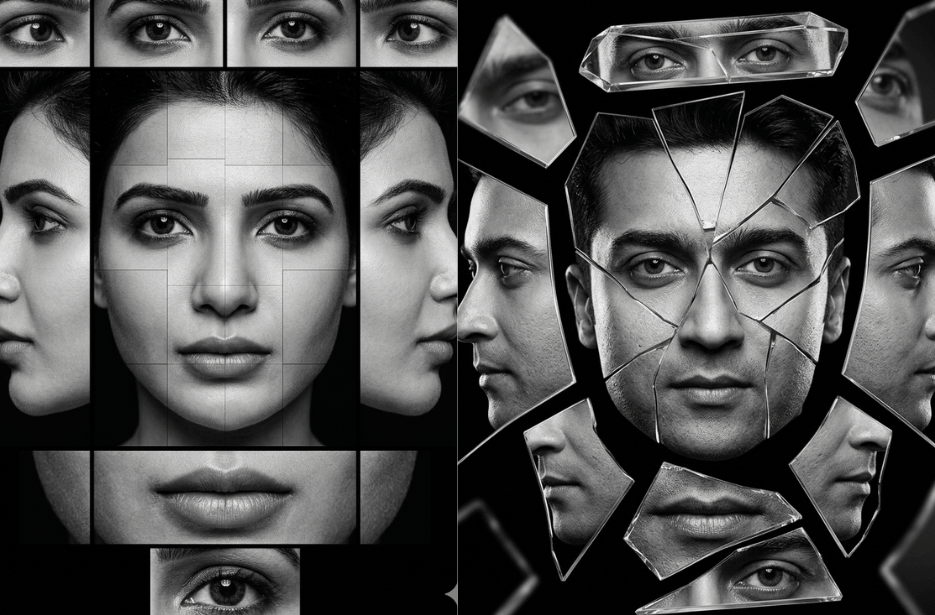
Creating art doesn’t have to start with a blank canvas anymore. With AI, you can turn simple words into striking visuals, including bold, geometric interpretations of the human face that look like they belong in a modern art gallery. Whether you are a designer looking for fresh inspiration or a beginner just curious about AI-generated art, learning how to guide these tools with the right prompts can completely change the way you create.
Version 1: Geometric Mosaic Portrait
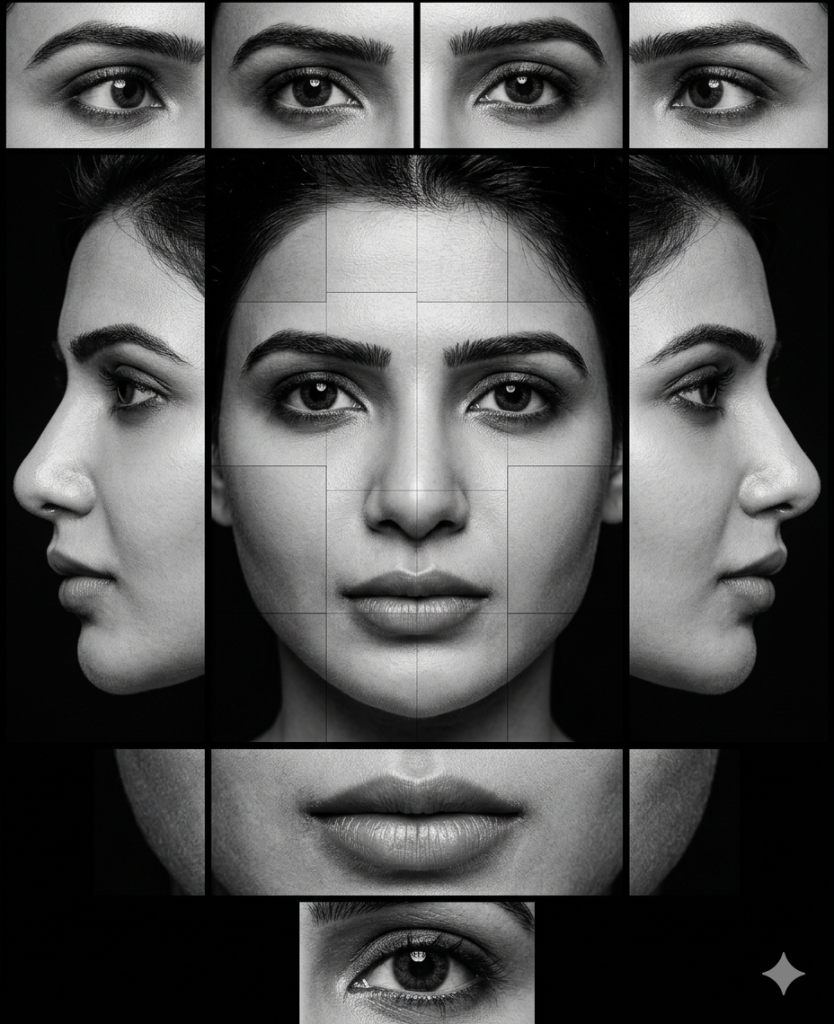
Center: a frontal face formed by multiple rectangular pieces seamlessly joined together like a puzzle, each tile representing a slightly different crop or angle, perfectly aligned to reconstruct a complete face. The seams are subtle but visible, creating a fragmented-yet-cohesive effect. Neutral expression, direct gaze, perfectly symmetrical alignment.
Surrounding the center: additional rectangular tiles showing different perspectives of the same face — left and right side profiles, 3/4 angles, and close-ups of eyes and mouth.
Top row: cropped eye segments from different angles arranged horizontally.
Middle sides: mirrored side profiles facing outward.
Bottom: a centered lips close-up tile, and beneath it a single eye tile.
Tiles are tightly arranged in a structured grid, slightly overlapping, with clean sharp edges and precise spacing.
Lighting: high-contrast studio lighting, soft directional light emphasizing facial contours, cheekbones, and jawline.
Style: monochrome black and white, deep blacks, bright highlights, cinematic editorial photography.
Texture: ultra-detailed skin pores, natural facial hair, photorealistic detail.
Background: pure black, minimal and distraction-free.
Lens: 85mm portrait lens, shallow depth of field (f/1.8), center face extremely sharp, surrounding tiles slightly softer.
Composition: vertically centered, symmetrical layout, balanced geometric arrangement.
Concept: fragmented identity, multi-perspective reconstruction, puzzle-like face assembly, surreal yet realistic.
Resolution: 8k, ultra sharp, professional studio quality.
Negative Prompt: color, blur, low resolution, distorted face, broken alignment, extra eyes, warped puzzle, messy collage, random tile placement, cartoon, painting, illustration, noise, grain, artifacts
Version 2: Shadow Fragment Light-Sculpted
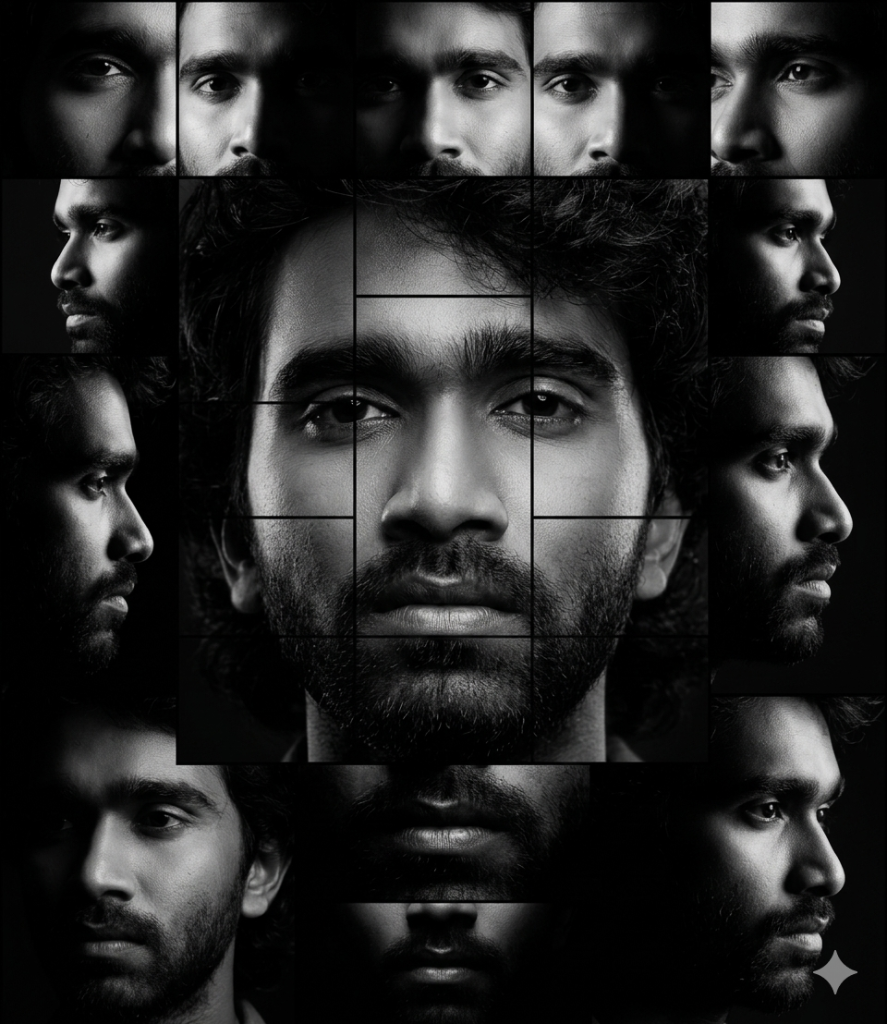
Center: face reconstructed from rectangular tiles with differing shadow directions.
Surrounding: tiles show shifting lighting across the same face, profiles and angled views.
Top: upper-face fragments with varied shadow cuts.
Sides: profiles emerging from darkness.
Bottom: lips partially obscured in shadow, beneath it a subtle facial fragment.
Grid: tightly structured, separation defined by light rather than borders.
Lighting: dramatic chiaroscuro.
Style: cinematic black and white.
Texture: sculptural skin detail.
Background: deep black.
Lens: 85mm.
Concept: identity shaped by light.
Resolution: 8k.
Negative prompt: flat lighting, blur, low contrast.
Version 3: Shattered Mirror Portrait
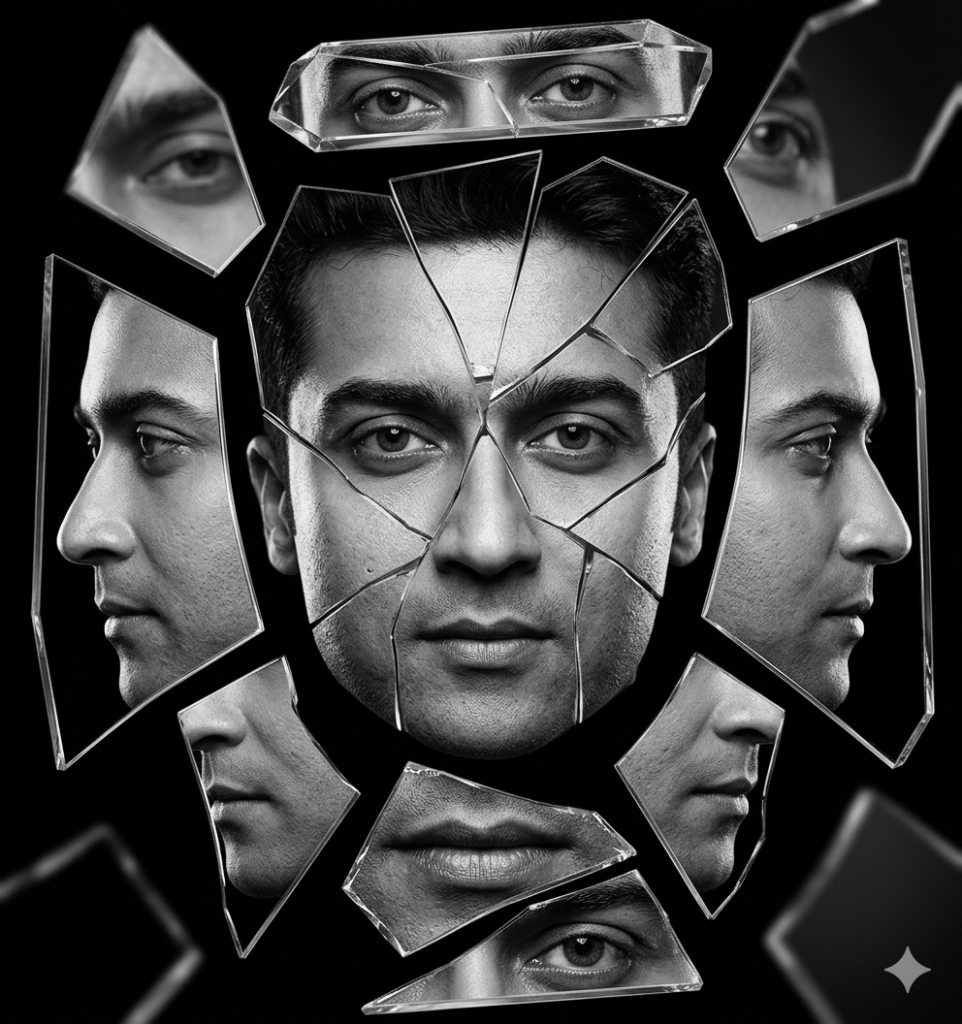
Center: a dominant frontal face reconstructed from multiple irregular glass-like fragments, each shard containing a different crop or angle of the same face, seamlessly aligned to form one complete portrait. The fragments fit together like broken mirror pieces, with sharp geometric edges and subtle reflective borders, creating a fractured yet elegant structure. Neutral expression, direct eye contact, strong symmetrical balance.
Surrounding the center: suspended mirror shards displaying alternate perspectives of the same face — left and right side profiles, dramatic 3/4 views, close-up details of the eyes, nose, lips, and jawline.
Top area: fragmented eye reflections placed in floating horizontal crystal-like shards.
Side sections: mirrored profile fragments facing outward like reflective sculptures.
Bottom section: a sharp lips close-up embedded inside a large broken-glass shard, with a single intense eye reflection below it.
Fragments appear suspended in space with precise spacing, subtle depth layering, and cinematic arrangement, creating a luxury editorial visual rather than a grid layout.
Lighting: dramatic high-contrast studio lighting with sharp rim light and soft directional shadows, emphasizing bone structure, skin texture, and reflective shard edges.
Style: monochrome black and white, deep cinematic blacks, silver highlights, luxury fashion editorial aesthetic.
Texture: ultra-detailed skin pores, realistic reflections on glass fragments, photorealistic detail, subtle mirror distortion without facial warping.
Background: pure black with soft vignette, minimal and premium.
Lens: 85mm portrait lens, shallow depth of field (f/1.4), central face razor sharp, outer fragments slightly softened for depth.
Composition: vertically centered, symmetrical but organically fragmented, elegant floating structure with visual depth.
Concept: fractured identity, mirror reflections of self, multi-perspective reconstruction, shattered reality, surreal yet hyper-realistic.
Resolution: 8k, ultra sharp, museum-quality studio photography.
Negative Prompt:
color, blur, low resolution, distorted face, broken anatomy, extra eyes, warped reflections, messy composition, random shard placement, cartoon, painting, illustration, noise, grain, artifacts, low detail.
Version 4: Newspaper Cutout Portrait
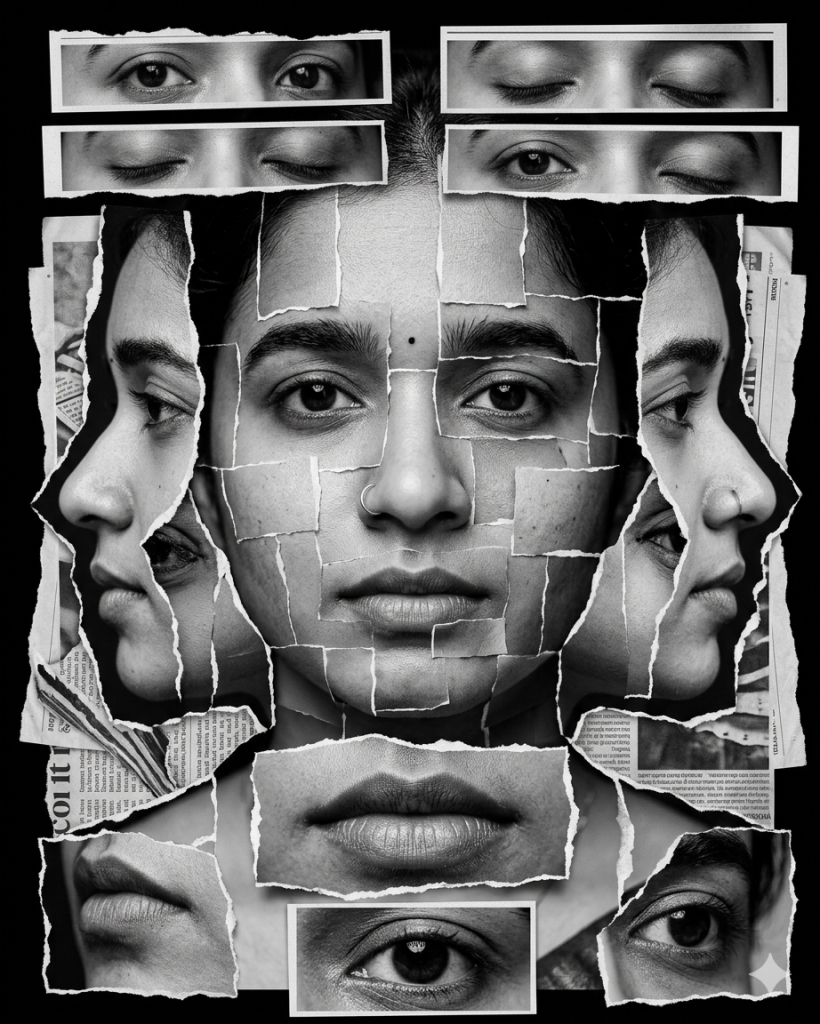
Center: a dominant frontal face reconstructed from layered newspaper-style cutouts, where different sections of the face are formed using torn paper fragments containing subtle text textures, grayscale print patterns, and photographic facial crops. Each piece fits together precisely to rebuild one complete portrait while preserving a fragmented editorial aesthetic. Neutral expression, direct gaze, perfectly balanced symmetry.
Surrounding the center: additional torn paper panels showing alternate perspectives of the same face — left and right side profiles, dramatic 3/4 angles, and close-up details of the eyes, lips, and jawline.
Top area: horizontal paper strips featuring cropped eye segments from different perspectives arranged like editorial headlines.
Side sections: mirrored side profile cutouts facing outward, framed by layered newspaper textures and sharp torn edges.
Bottom section: a centered lips close-up printed on a bold torn-paper fragment, with a single eye panel placed beneath like a magazine feature.
Paper layers overlap slightly with clean composition, sharp ripped edges, subtle shadows, and structured placement, creating a premium fashion editorial look.
Lighting: dramatic studio lighting with strong contrast, soft directional highlights, and defined shadows emphasizing facial structure and paper depth.
Style: monochrome black and white, deep blacks, bright highlights, luxury editorial magazine photography.
Texture: ultra-detailed skin pores blended with realistic paper grain, subtle print texture, photorealistic torn-paper detail.
Background: pure black with minimal visual noise, clean and premium.
Lens: 85mm portrait lens, shallow depth of field (f/1.8), center face extremely sharp, surrounding paper fragments slightly softer for depth.
Composition: vertically centered, symmetrical layout with layered editorial structure, balanced and visually powerful.
Concept: identity through memory, media reconstruction, fragmented personality, surreal editorial realism.
Resolution: 8k, ultra sharp, professional magazine-quality portrait photography.
Negative Prompt: color, blur, low resolution, distorted face, broken anatomy, extra eyes, warped cutouts, messy collage, random paper placement, cartoon, painting, illustration, noise, grain, artifacts
How to Use These Prompts
1. Below each image, you will see a prompt box with two buttons: Copy and Share to AI.
2. You can tap Copy to copy the full prompt manually. Or simply tap Share to AI; this will automatically copy the prompt for you.
3. After tapping Share to AI, a list of popular AI tools like ChatGPT, Gemini, Copilot, and others will appear on your screen.
4. Click on any AI tool you prefer. It will directly open the selected AI platform.
5. Once the AI page opens, paste the prompt into the prompt box (it is already copied if you used Share to AI).
6. Upload your reference image if required.
7. Click generate, and your image will be created.
8. If needed, you can slightly adjust the prompt for lighting, angle, or mood and generate again.
9. Once you are satisfied with the result, download the image and save it for your use.
Additional Tips to Make Your AI Prompts Better
Small changes in your wording can completely transform the final image. Below are some practical tips to help you craft stronger, more effective prompts.
1. Be specific with details
Instead of writing “geometric face,” try something more descriptive like “symmetrical geometric human face with sharp angles, layered shapes, and vibrant colors.” The more detail you include, the closer the result will match your vision.
2. Mention style and mood
Add artistic direction by including words like abstract, futuristic, minimalist, or cubist. You can also describe the mood, dramatic lighting, soft tones, or high contrast, to guide the overall feel of the image.
3. Use references and influences
If you have a certain look in mind, mention art styles or movements (like cubism or modern digital art). This helps the AI better understand the aesthetic you’re aiming for.
4. Control composition and structure
Include details about positioning, such as front-facing portrait, centered composition, or split-face symmetry. This ensures the geometry of the face is clearly defined.
5. Experiment and refine
Your first result might not be perfect, and that’s normal. Adjust your prompt by adding or removing details, changing keywords, or emphasizing different elements until you get the desired outcome.
6. Add technical cues
Phrases like high resolution, detailed textures, or 4K quality can improve the sharpness and clarity of your generated images.
7. Keep it balanced
Avoid overloading your prompt with too many ideas. A clear, focused prompt often works better than one packed with conflicting instructions.
With a bit of practice and experimentation, you’ll quickly learn how to shape your prompts to produce exactly the kind of geometric face artwork you’re imagining.